Foundry Tech: Grey Iron
Grey iron, also known as cast iron, has been produced for more than 2,000 years. It remains one of the most widely used casting materials due to its low cost and ease of production. While it has been surpassed by higher-strength alloys in many...
Foundry Tech: Nickels & Alloys
Welcome to the final article in the series of Material Reviews that has been running for the last couple of years. Nickel and its alloys, like the stainless steels, offer a wide range of corrosion and/or heat resistance. However, nickel can...
Foundry Tech: Materials Produced at White Industries
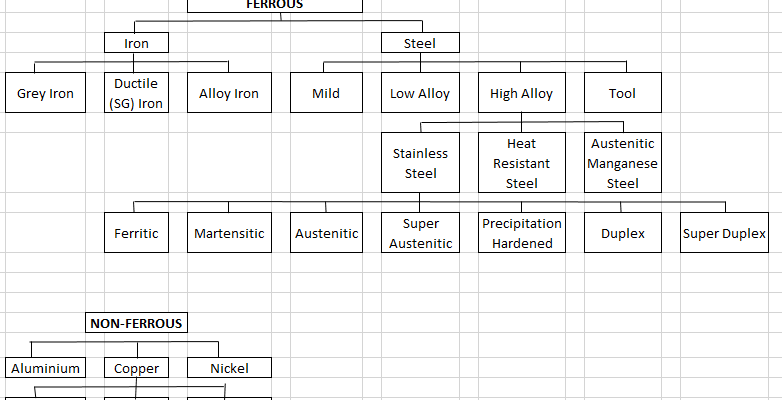
We offer a wide range of different materials at White Industries. Usually, our customers supply a drawing that specifies a material, and we produce to that specification. Sometimes a customer won’t know what material the casting should be made in,...
Foundry Tech: Nickels & Alloys
Welcome to the final article in the series of Material Reviews that has been running for the last couple of years. Nickel and its alloys, like the stainless steels, offer a wide range of corrosion and/or heat resistance. However, nickel can...
Foundry Tech: Brasses and Bronzes
In this newsletter, we are looking at Brasses and Bronzes. You’ll note that some brasses fall under bronzes, and vice versa. This is due to various naming conventions over the years. Brasses This is a broad term which is split into 4 subgroups,...
Foundry Tech: Copper-based alloys
In this edition, we’ll begin exploring copper-based alloys. They are a widely used family that has been around since around 3300 BC. The copper family falls under the following main groups, which are further split into subgroups as different...
Foundry Tech: Aluminium
Up till now, we’ve explored ferrous alloys, those based on the element Iron (Fe). In this article, we start exploring non-ferrous alloys with this article devoted to Aluminium (or Aluminum), or what some people refer to as “alloy”. Aluminium...
Foundry Tech: Fettling and Heat Treatment
In this edition, we look at Fettling and Heat Treatment. When a pattern is being prepared for moulding, extra features are added such as a runner bar and pouring cup, so the metal can enter and fill the mould cavity at the right speed (too slow and...
Foundry Tech: Tool Steels
The last ferrous metal system that we are looking at in this series is Tool Steels. Tool Steels occupy a unique position in the ferrous family in that components made of Tool Steel are used to make other steel parts. Tool Steels can be used to make...
Foundry Tech: Austenitic Manganese Steel
Another highly alloyed steel family is Austenitic Manganese Steel (AMS). The original grade was invented by Sir Robert Hadfield in the 1880s, and the family is still referred to as Hadfield Steel. This family of steel contains anywhere from 11-25%...